|
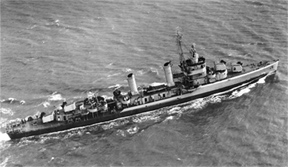
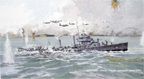
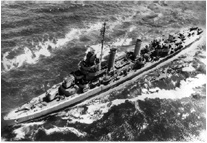
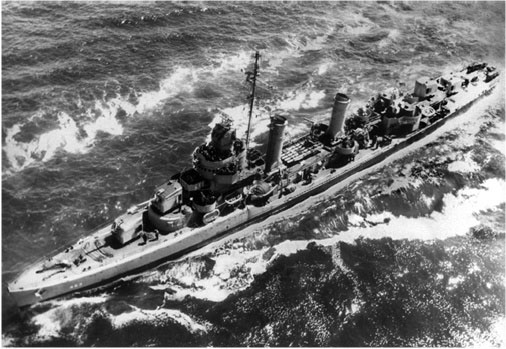
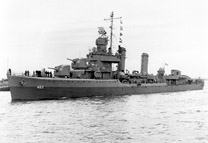
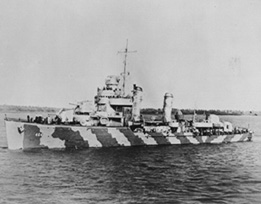
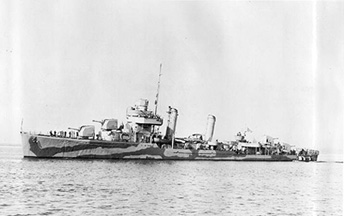
Until June 6, 1944, German dictator Adolf Hitler had conquered most of Europe. The Allied invasion at Normandy, France, was the largest naval assault in history with more than 5,000 vessels departing southern England for the offensive to end Hitler's occupation of Europe. The destroyer USS Corry (DD-463) led this massive invasion armada across the English Channel to Normandy.
|
|
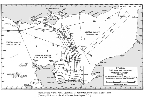
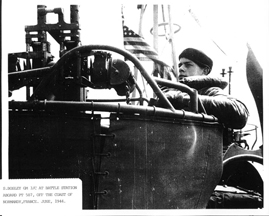
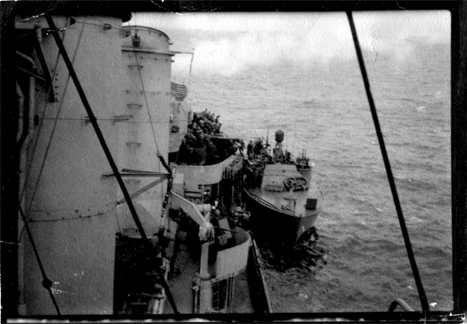
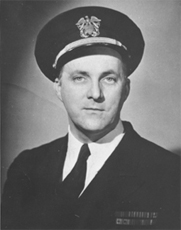
While crossing the English Channel en route to Normandy, USS Corry commanding officer Lieutenant Commander George Dewey Hoffman informed his crew, "We are expendable on this mission." After arriving at the coast of France, in the early morning hours of June 6, 1944, the USS Corry took up her bombardment position as one of five front line destroyers off Utah Beach and fiercely engaged German artillery firing from the Normandy shore. A prime target at the front of the invasion force, the Corry drew sustained shelling for more than an hour while successfully evading major damage. Maneuvering as close as 1,000 yards from the beach, she fired several hundred rounds of 5-inch ammunition at numerous Nazi targets. |
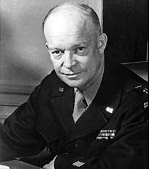
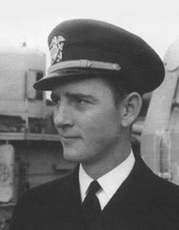
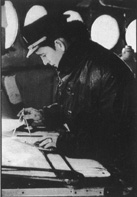 On USS Corry bridge, Commanding Officer Lieutenant Commander George Dewey Hoffman, godson of legendary Admiral George Dewey. |
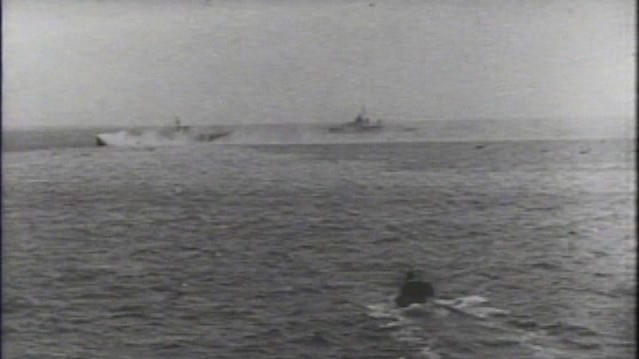
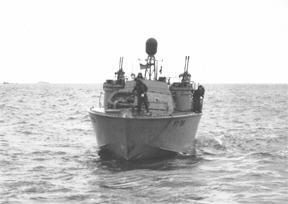
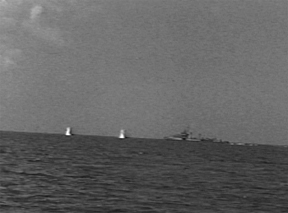 Two near misses off Corry bow from shore batteries. [National Archives film footage shot from PT-507] |
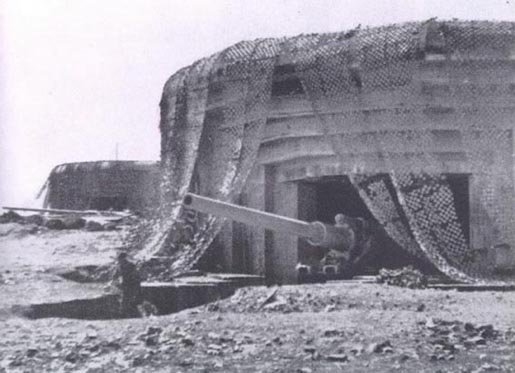
As H-Hour neared, when troops would land and fight their way onto the beaches, two Allied planes began generating smoke screens between the shore batteries and bombarding warships to conceal the ships from enemy fire. While other frontline destroyers and rear vessels were receiving smoke cover, the plane assigned to lay smoke for the Corry suddenly got shot down, leaving the Corry fully exposed to German gunners who were now firing at her in full fury. With her four 5-inch guns, the Corry moved very close to the beach for precision firing, attempting to eliminate the Saint Marcouf/Crisbecq battery, which was the heaviest artillery battery on the shore, fortified with three 8.25-inch (210-mm) guns that fired massive 300-pound projectiles. To silence that battery early in the invasion would be a tremendous contribution to the troop landings. After a heated duel with the battery that lasted several minutes, enemy salvos began landing very close to the Corry, erupting towering plumes of water all around her. |
|
At just about H-Hour (0630), while seeking to
evade intense fire from the Saint Marcouf battery and other batteries, the Corry suffered direct heavy-caliber
artillery hits amidships below the water level in her engineering spaces.
The jarring explosions jolted the ship, causing men to be thrown violently from
their positions. Steam hissed and roared profusely from behind the bridge. With her rudder jammed
the Corry traveled around in a circle
before all steam was lost. Still under heavy fire, she began
sinking rapidly with her keel broken and a foot-wide crack across her main
deck amidships. |
|
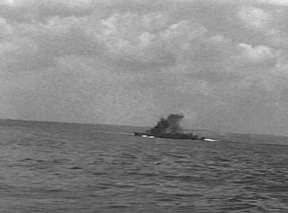
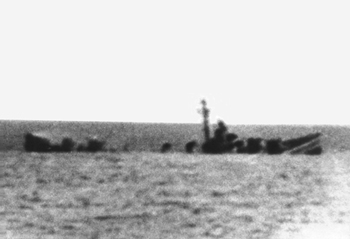 USS Corry sinking off Utah Beach June 6, 1944 [photo from the collection of George K. S. Hardy, crewmember of the destroyer USS Fitch (DD-462)] |
After the order to abandon
ship, crewmembers fought to survive in rough, bone-chilling 54-degree water for more than two
hours before being rescued. All the while, the Corry survivors were under constant enemy fire from German shore
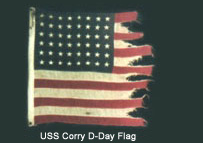
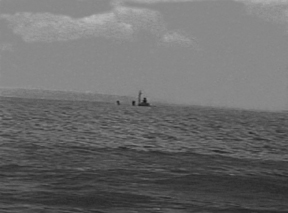
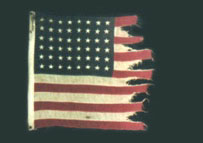
gunners. One Corry crewmember raised the American flag up the sunken Corry's
main mast, which remained above the surface of the shallow 30-foot deep water
when the wreckage settled on the bottom. The ship blast along with
additional casualties
suffered out in the water from shelling, drowning, and exposure, resulted in 24 crewmen giving their lives and 60 being
wounded, many seriously. For USS Corry survivors, the morning of June
6, 1944 was one harrowing experience they'd never forget.
|
|
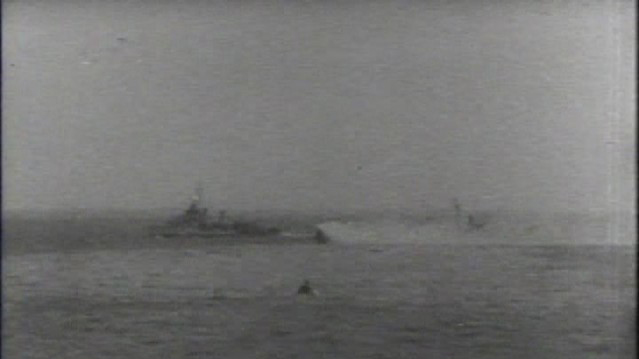 Second destroyer passes to the rear of sinking USS Corry. [Still image from D-Day newsreel - NARA ref #: 111 ADC 01319]
|
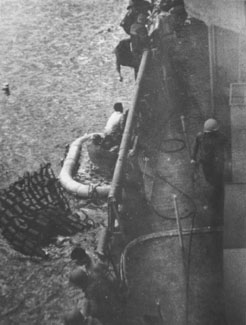

 (1988 photo)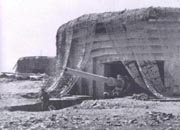
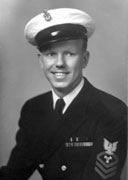
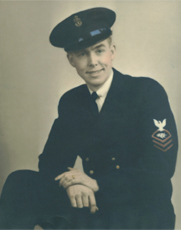
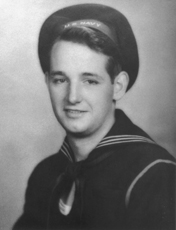
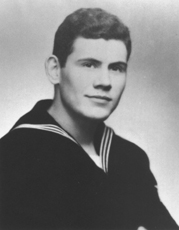
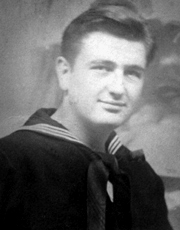
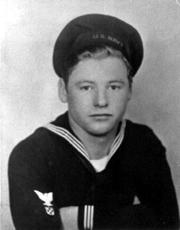
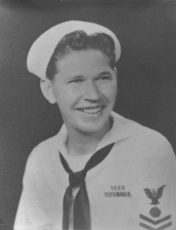
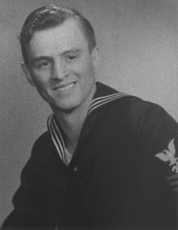
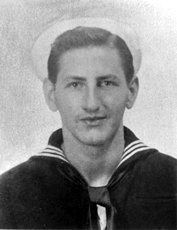
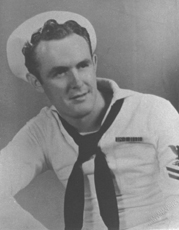
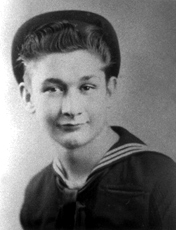
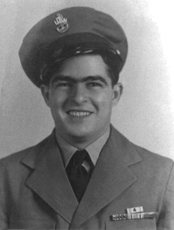
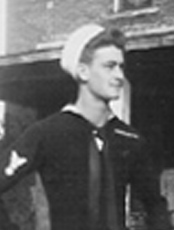
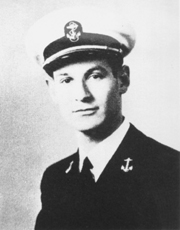
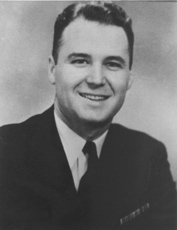
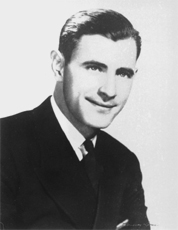

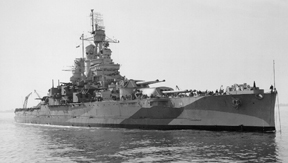
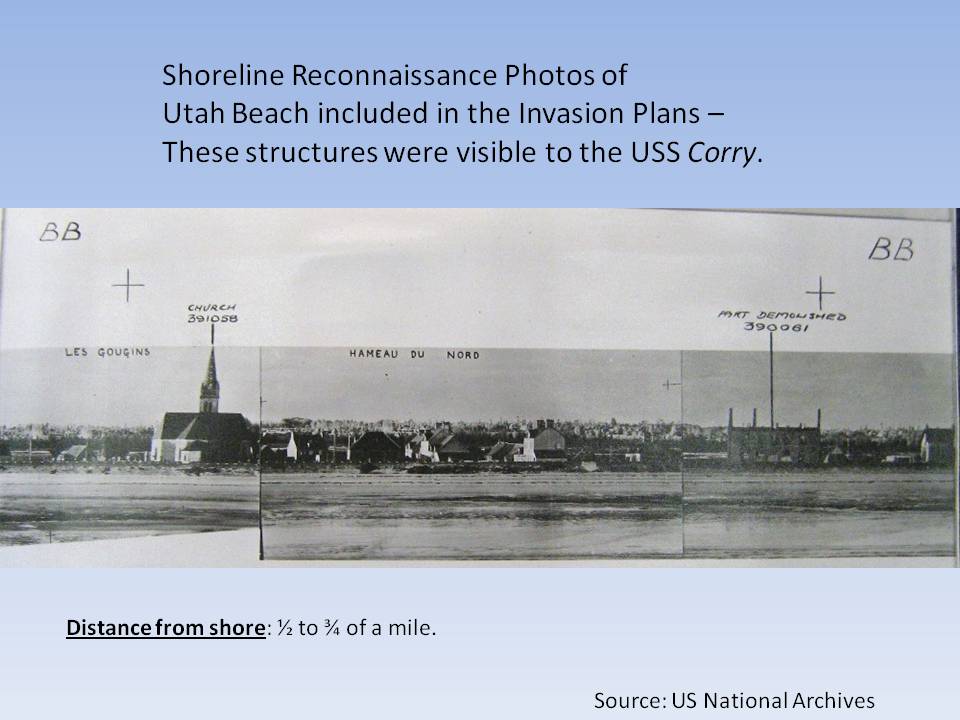
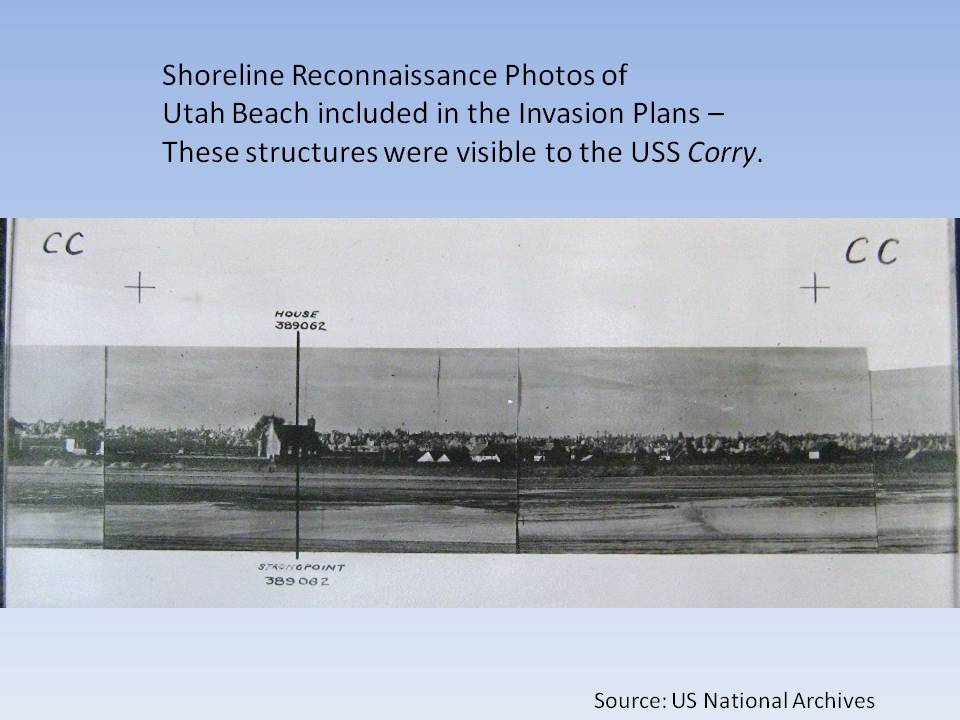
 National Archives photo]
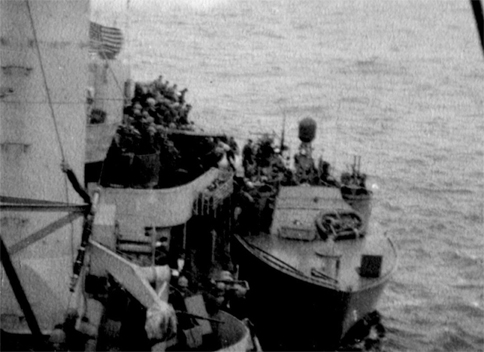
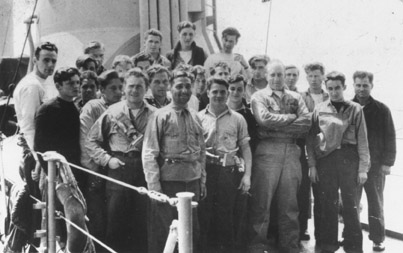
 [National Archives
photos]
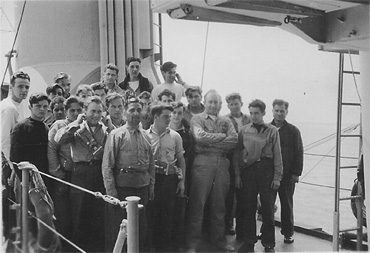
[National Archives
photos]